
By Steve Heavey, Managing Director & Founder, Asset Based Lending
A record year for small business lending. And a record amount of small business tax debt. The problem is the first doesn’t always work when the second is there — and the two numbers are connected in a way the headline figure doesn’t show.
The headline number
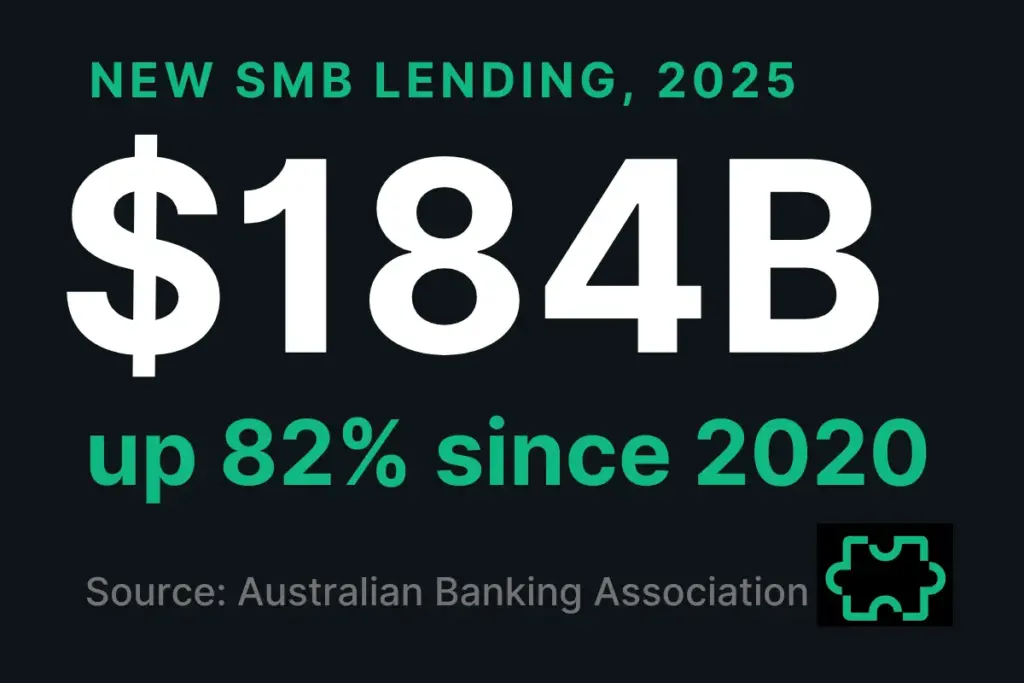
$184 billion in new small business lending in 2025. Up 82% since 2020. Bank lending to small business has grown faster than lending to large business over the same period, which rose just 2%. The Australian Banking Association is entitled to be proud of that number.
I don’t dispute it. What I’d push back on is the story it’s being used to tell.
What the number doesn’t count
I’ve been in commercial finance for nearly 30 years now, and access to funding and cash flow have been the two things that keep small business owners up at night for every one of them. What’s changed is how many directions the pressure comes from at once. Tax debt is more expensive to carry than it used to be. Super now has to be paid every payday instead of once a quarter. Wage costs keep climbing. Suppliers are taking longer to pay than they used to.
Small businesses currently carry close to two-thirds of the ATO’s total collectable tax debt. That’s been roughly the share for years — the number itself has just kept growing. The ATO has been direct about what that means: it isn’t a bank, and it was never designed to be a cash flow buffer.
A business doesn’t end up with ATO debt because it’s badly run. Usually one thing happened that wasn’t in the plan — a late payment, a cost blowout, a supplier who didn’t come through. That’s not a red flag. That’s most small businesses, most years.
Why the two numbers are connected
The $184 billion in new lending and the growing tax debt book aren’t two separate stories sitting side by side. They’re the same story. Bank lending is underwriting the businesses whose numbers already look clean — consistent cash flow, no tax debt, a trend line that fits three years of history. That’s a reasonable way for a bank to lend. It’s also, by definition, not going to reach the businesses carrying the debt in the first place.
A bank’s process isn’t built to tell the difference between “this business hit a bump” and “this business is a bad risk.” Both show up the same way on a set of financials — which means good businesses get filtered out alongside genuinely risky ones.
We don’t assess the plan, the trading history, or the tax position. We assess the asset the business already owns, and we lend against it, fast.
Where ABL fits
This isn’t a replacement for bank finance. It’s a different lens sitting alongside it. At Asset Based Lending, we ask a narrower question than a bank does: is there an asset here, and can we secure against it. That question doesn’t care about the plan, the trend line, or the tax position — which means it can reach businesses a bank’s process was never going to reach.
The asset doesn’t have to sit on the business’s own balance sheet either. It can be owned by the business, a director, or a third party — the only requirement is that ownership is clear and the asset is unencumbered, so we can secure against it.
- Loan amounts: $20,000 to $1,000,000, against moveable assets only
- Ownership: business, director, or third party — as long as it’s clear and unencumbered
- Term: 1–6 months, short-term by design, extendable to 9 if needed
- Exit: anytime after month 1, no penalty — only pay for the days used
- Assessment: no financials, no credit score, no forecasting — the asset is the decision
A record lending number and a record tax debt number can both be true at once, and neither is a contradiction. Recognising the gap between them — and building something that actually reaches it — matters more than celebrating the headline figure on its own.
If a client’s numbers don’t fit a bank’s spreadsheet, ask one question: is there an asset of value they’d put up to solve this? If yes, there’s a deal worth bringing to us — wherever they sit in that gap between “needs finance” and “looks fundable to a bank.”
Related pages
Where this fits in our network, and where to go next.
What Is Asset-Based Lending?
The complete guide to how ABL works, the products on offer, and when this kind of lending is the right fit.
Read the guide →For Business Owners
How asset-based lending helps business owners release equity from what they already own, without slowing operations down.
View page →Remote, urgent, seasonal finance — solved with tractors
A Katherine, NT farm used $400K against three tractors to ride out a tough season — no monthly repayments, no missed jobs.
Read the deal →Bank lending is growing. The gap is still there.
If your client’s numbers don’t fit a bank’s spreadsheet, that’s not the end of the conversation. ABL doesn’t need credit checks or financials — the asset is the security, and the structure can be built around what the business actually needs.