
Payday Super changed the cash flow baseline for every small business with staff. What used to be one predictable quarterly number is now a weekly draw, no exceptions, no buffer.
Most businesses adjusted for the initial shift. Fewer are set up for what happens when something else lands on top of it.
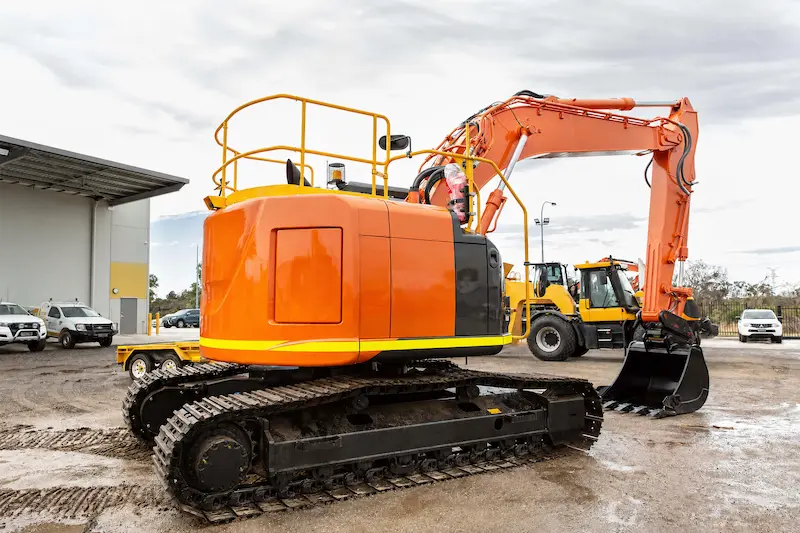
One ABL client, a civil contractor, hit that exact overlap. A new job came in right as the weekly rhythm kicked in, and they needed funding fast. They owned a 20-tonne excavator outright. ABL released $180K against it, fitted GPS tracking, and the machine kept earning while the new job got funded.
What Payday Super changed for small business cash flow
The quarterly buffer is gone, permanently, for any business with employees. Super used to land once every three months, a number you could plan around well in advance. Since Payday Super, it lands every payday. There’s no catching up in a slower month, no using next quarter’s cash to smooth this quarter’s gap.
Most businesses built something to get through the initial change. What’s less common is a plan for what happens when a second, genuinely temporary cost, a new job, a new site, a supplier payment, lands on top of that new permanent baseline. That’s when the gap stops being manageable on its own and starts needing outside support.
The situation
A civil contractor picked up a new project. More crew on the payroll, more costs before the first invoice landed. That’s a squeeze this business had handled before. What changed is the ground underneath it.
Super used to be one predictable number every quarter. Since Payday Super came in, it’s a weekly draw, every payday, no exceptions, no 28-day buffer to plan around. The new project’s start-up costs landed straight on top of that new baseline. Two costs that used to sit in different columns were suddenly hitting the same account, every week, at once.
This is what asset-based lending looks like at its simplest. You own an asset with equity in it. You need short-term cash. ABL releases the equity for the loan term, secured against the asset, and that security is released once the loan is repaid.
The asset
A 20-tonne excavator, owned outright by the contractor. Already earning on another job when the new project came in.
For an asset-based lender, that’s enough to underwrite. The asset is the security, the business is the borrower, the deal doesn’t need a polished P&L to make sense.
The need
$180K to get the crew paid and the new job started, while the business found its footing under the new weekly super rhythm. A specific, short-term gap tied to one event, not an ongoing shortfall.
The structure
The deal went through as a Track It facility. $180K released against the excavator. A GPS tracking unit fitted for the loan term.
The excavator stayed exactly where it needed to be, working its current job, while the new project got its start-up funding elsewhere. ABL had visibility on the asset, the contractor had cash for the new job, neither machine nor project missed a beat.
- Product: Track It
- Asset: 20-tonne excavator, owned outright
- Loan amount: $180K
- Use of funds: New project start-up costs, crew and gear
- Security: GPS tracker fitted, machine remained in active use
The outcome
Crew paid, new job underway on schedule. The project’s start-up costs never had to compete with the weekly super obligation. The excavator stayed on site the whole time, earning, while the loan was retired as the first invoices from the new job came through.
When you can’t solve the cash flow crunch, the asset becomes the answer. Out of time isn’t out of options, that’s when you make the call to ABL.
Why this deal worked
Three things had to be true for the deal to work. They’re the same three things every Track It deal needs:
- An asset with real equity, owned outright. The excavator wasn’t financed and nothing else was sitting against it. It could be secured cleanly while staying in daily use.
- A short-term gap, not a long-term issue. The need was tied to one project’s start-up, not an ongoing shortfall. That’s the kind of bridge ABL is built for.
- The right product for the asset. With the excavator already earning on another job, pulling it off site would have cost more than it solved. Track It kept it working while the deal ran.
Payday Super changed the baseline for every client with a large weekly-paid crew. It didn’t create new problems on its own, it removed the buffer that used to absorb them. If a client’s start-up costs, a new job, a supplier payment, a bond, are landing at a worse time than they would have a year ago, that’s the gap to ask about. If they own plant outright, that’s an ABL conversation.
Related pages
The product, the audience hub, and the ABL View for this kind of deal.
Track It
Asset in service. Capital today. Built for deals where the asset has to keep earning while the loan runs, with a GPS unit fitted for visibility.
View Track It →For Brokers
How ABL works with finance and commercial brokers. The deals we take, the assets we lend against, how we structure when the numbers don’t immediately add up.
View page →What is Asset-Based Lending?
The complete Australian guide. How it works, what it costs, when to use it, how it compares to bank, cash flow and asset finance lending.
Read the guide →Payday Super changed your buffer. The asset can rebuild it.
If your business owns an asset outright and a new cost has landed on a cash flow floor that’s already thinner than it used to be, Track It is the structure. We release the equity, fit a tracker, and the asset keeps working. Free desktop valuation and a clear borrowing figure, all inside 2 hours. Same-day settlement when the asset is secured.